Free Shipping over $70
 Easy Returns
 Money-back Guarantee


The supplement world is exhausting.
Every other week, there's some new powder or pill promising to revolutionise your health. This article isn't here to pile on, but there is a convincing argument as to why creatine should be near the top of your supplement list.
And surprisingly, it's not just about getting jacked at the gym (though it definitely helps with that).
What is creatine?
Creatine is a non-protein amino acid, which basically means it doesn't get used to build proteins like other amino acids you might've heard of. Instead, it's about energy production. About 95% of your body's creatine hangs out in your muscles, with the rest scattered around your brain, bones, and heart.
The whole point of creatine monohydrate is to help your cells pump out more ATP, which is your body's main energy currency. More creatine means your cells can work better, whether you're doing a workout or just trying to focus on a boring Zoom call.
Creatine was first found in meat way back in 1832 by a French scientist named Michel Eugène Chevreul. He named it after the Greek word kreas, which literally means "meat." Your body makes its own creatine, so technically it's "non-essential," but that doesn't mean getting more from food or supplements won't help you out.

Why is creatine worth your time?
Most people hear "creatine" and immediately think gym bros and protein shakes. Yes, it's brilliant for building muscle, getting stronger, and improving your performance, but research shows it also supports brain function, bone health, and healthy aging.
The safety profile of creatine is also really solid. There’s a reason it’s the only supplement (outside protein powder) sold on the Pure Plant Protein website. It’s safe and it works. Side effect wise the worst thing someone might get is a bit of stomach upset, maybe some nausea, but that's usually fixable by splitting your dose or taking it with food. Compared to a lot of supplements, creatine's pretty much a non-issue on the side effects front.
Interesting creatine stats
Here are some proven stats that studies of creatine have revealed that are very interesting:
-
Muscle creatine stores can rise 15–40%, depending on your baseline levels
-
Exercising muscles absorb 68% more creatine than non-exercised muscles during loading
-
Low meat/fish eaters can see 20–40% bigger increases in muscle creatine than those already near saturation
-
In older adults (66–76 yrs), creatine improves memory with a large effect size
-
Pairing creatine with carbs or training enhances uptake due to insulin and muscle activation
-
Older adults gain +1.35 kg more lean body mass with creatine
The practical implementation of creatine
How much?
Aim for about 0.1 grams per kilogram of your body weight each day. So if you weigh 70kg, that's roughly 7 grams daily.
When?
It doesn't really matter as long as you're taking it consistently. Morning, night, pre-workout, post-workout, pick whatever works for your routine and stick with it.
Food or no food?
Either works. If it bothers your stomach, try taking it with a meal or in a smoothie.

Creatine isn't a magic bullet
Nothing is. But creatine is one of those rare supplements that's been studied extensively, has a strong safety record, and actually delivers on its promises. If you're chasing better workouts, sharper thinking, or just want to age well, creatine is a small daily habit that yields worthwhile returns.
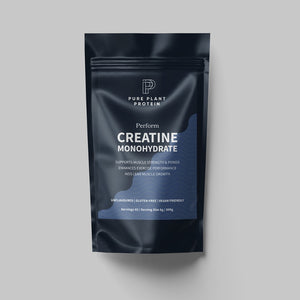
If you are ready to give this a try, check out our high-purity creatine, which is undiluted, with no fillers, sweeteners, or additives, via our online store here.
Shop this blog